The 2050 Workforce: From Corporations to Fluid Contribution Networks
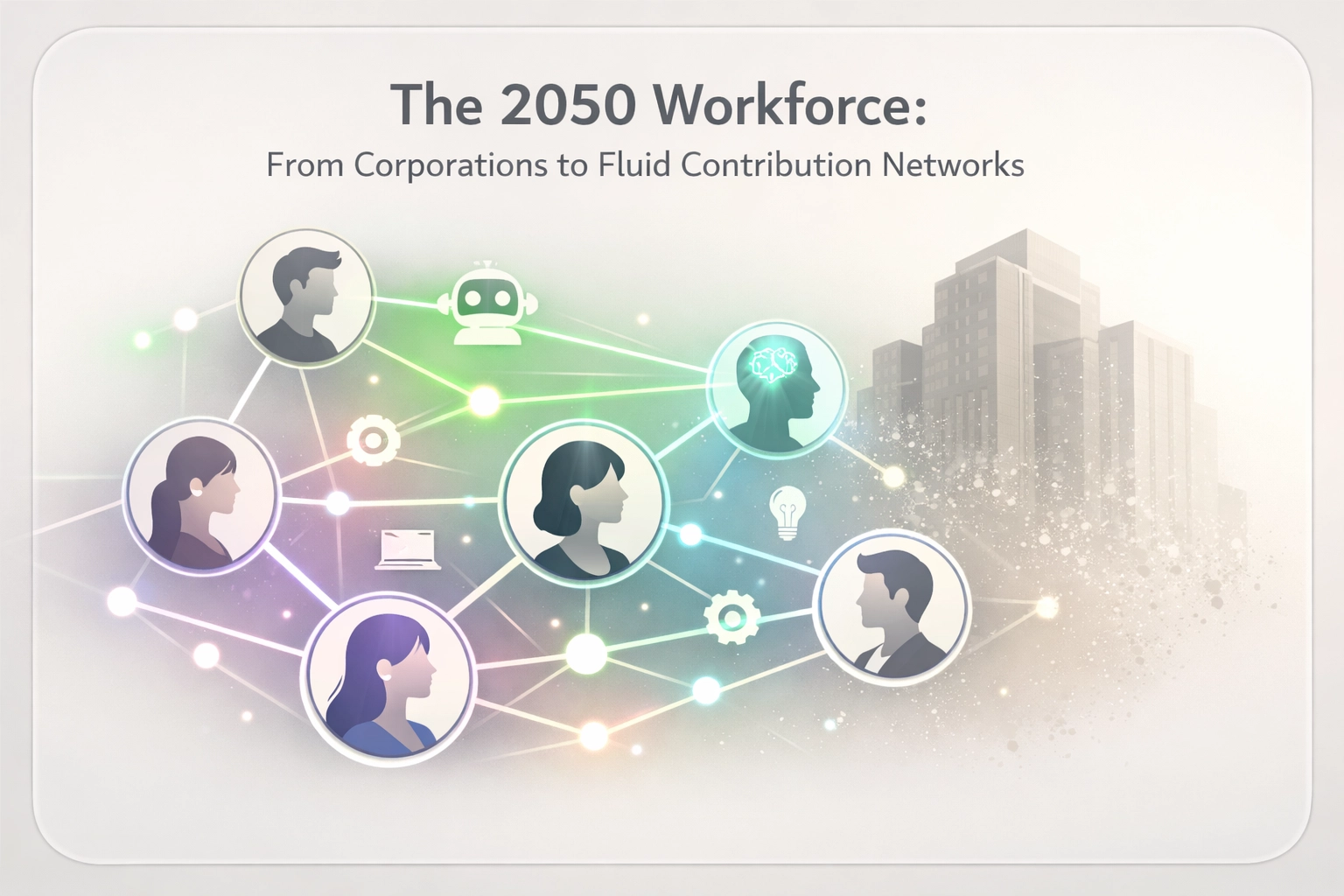
The 2050 Workforce: From Corporations to Fluid Contribution Networks
Building the right tech stack is key
Nisi enim consequat varius cras aliquam dignissim nam nisi volutpat duis enim sed. Malesuada pulvinar velit vitae libero urna ultricies et dolor vitae varius magna lectus pretium risus eget fermentum eu volutpat varius felis at magna consequat a velit laoreet pharetra fermentum viverra cursus lobortis ac vitae dictumst aliquam eros pretium pharetra vel quam feugiat litum quis etiam sodales turpis.
- Neque sodales ut etiam sit amet nisl purus non tellus orci ac auctor
- Adipiscing elit ut aliquam purus sit amet viverra suspendisse potent
- Mauris commodo quis imperdiet massa tincidunt nunc pulvinar
- Excepteur sint occaecat cupidatat non proident sunt in culpa qui officia

How to choose the right tech stack for your company?
Porta nibh aliquam amet enim ante bibendum ac praesent iaculis hendrerit nisl amet nisl mauris est placerat suscipit mattis ut et vitae convallis congue semper donec eleifend in tincidunt sed faucibus tempus lectus accumsan blandit duis erat arcu gravida ut id lectus egestas nisl orci id blandit ut etiam pharetra feugiat sit congue dolor nunc ultrices sed eu sed sit egestas a eget lectus potenti commodo quam et varius est eleifend nisl at id nulla sapien quam morbi orci tincidunt dolor.
What to consider when choosing the right tech stack?
At risus viverra adipiscing at in tellus integer feugiat nisl pretium fusce id velit ut tortor sagittis orci a scelerisque purus semper eget at lectus urna duis convallis. porta nibh venenatis cras sed felis eget neque laoreet suspendisse interdum.
- Neque sodales ut etiam sit amet nisl purus non tellus orci ac auctor
- Adipiscing elit ut aliquam purus sit amet viverra suspendisse potenti
- Mauris commodo quis imperdiet massa tincidunt nunc pulvinar
- Adipiscing elit ut aliquam purus sit amet viverra suspendisse potenti
“Vestibulum eget eleifend duis at auctor blandit potenti id vel morbi arcu faucibus porta aliquet dignissim odio sit amet auctor risus tortor praesent aliquam.”
What are the most relevant factors to consider?
Lorem cras malesuada aliquet egestas enim nulla ornare in a mauris id cras eget iaculis sollicitudin. Aliquet amet vitae in luctus porttitor eget. parturient porttitor nulla in quis elit commodo posuere nibh. Aliquam sit in ut elementum potenti eleifend augue faucibus donec eu donec neque natoque id integer cursus lectus non luctus non a purus tellus venenatis rutrum vitae cursus orci egestas orci nam a tellus mollis.
What tech stack do we use at Simpletech?
Eget lorem dolor sed viverra ipsum nunc aliquet bibendum felis donec et odio pellentesque diam volutpat commodo sed egestas aliquam sem fringilla ut morbi tincidunt augue interdum velit euismod eu tincidunt tortor aliquam nulla facilisi aenean sed adipiscing diam donec adipiscing ut lectus arcu potenti eleifend augue faucibus bibendum at varius vel pharetra nibh venenatis cras sed felis eget.
2050: the era of the “job title” is dead.
The 40-hour week sits in the museum next to the factory whistle.
92% of Tier-1 knowledge work is non-tenured.
The “corporation” has thinned into high-velocity Fluid Contribution Networks.
Organisations don’t hire people.
They ingest human–algorithmic atoms. Small, composable units of capability. Instantly matchable. Instantly priced.
What’s different in this version of the future isn’t just automation.
It’s coordination.
And yes, the early cracks showed up back in the mid‑2020s: gig penetration climbing, talent pools fragmenting, and the decline of manual testing as self-healing systems took over the boring bits first.
Today’s market signals are the building blocks.
2050 is what happens when the blocks become a new operating system.
The Macro Shift: DAOs and Autonomous Resource Allocation
By 2050, 84% of global tech entities operate as Decentralised Autonomous Organisations (DAOs).
In these structures, “management” isn’t a person. It’s an allocation stack.
The big move: work gets routed like packets.
From the outside it looks like a company.
Under the hood it behaves like a market.
Engineering: From Coding to Intent Architecture
Engineering didn’t “evolve”. It detonated.
The 2020s gave us the clue with self-healing code and the decline of manual testing.
By 2050, “Software Engineer” is a legacy label. The centre of gravity is the Intent Architect.
Not writing syntax.
Writing the rules that generate syntax.
The weird twist in 2050: engineering becomes closer to policy design than construction.
The best builders are the best boundary-setters.
The “Invisible” Sale: AI-to-AI Negotiations and the Strategic Human Architect
By 2050, sales isn’t loud. It’s invisible.
A silent market of machine-to-machine bargaining.
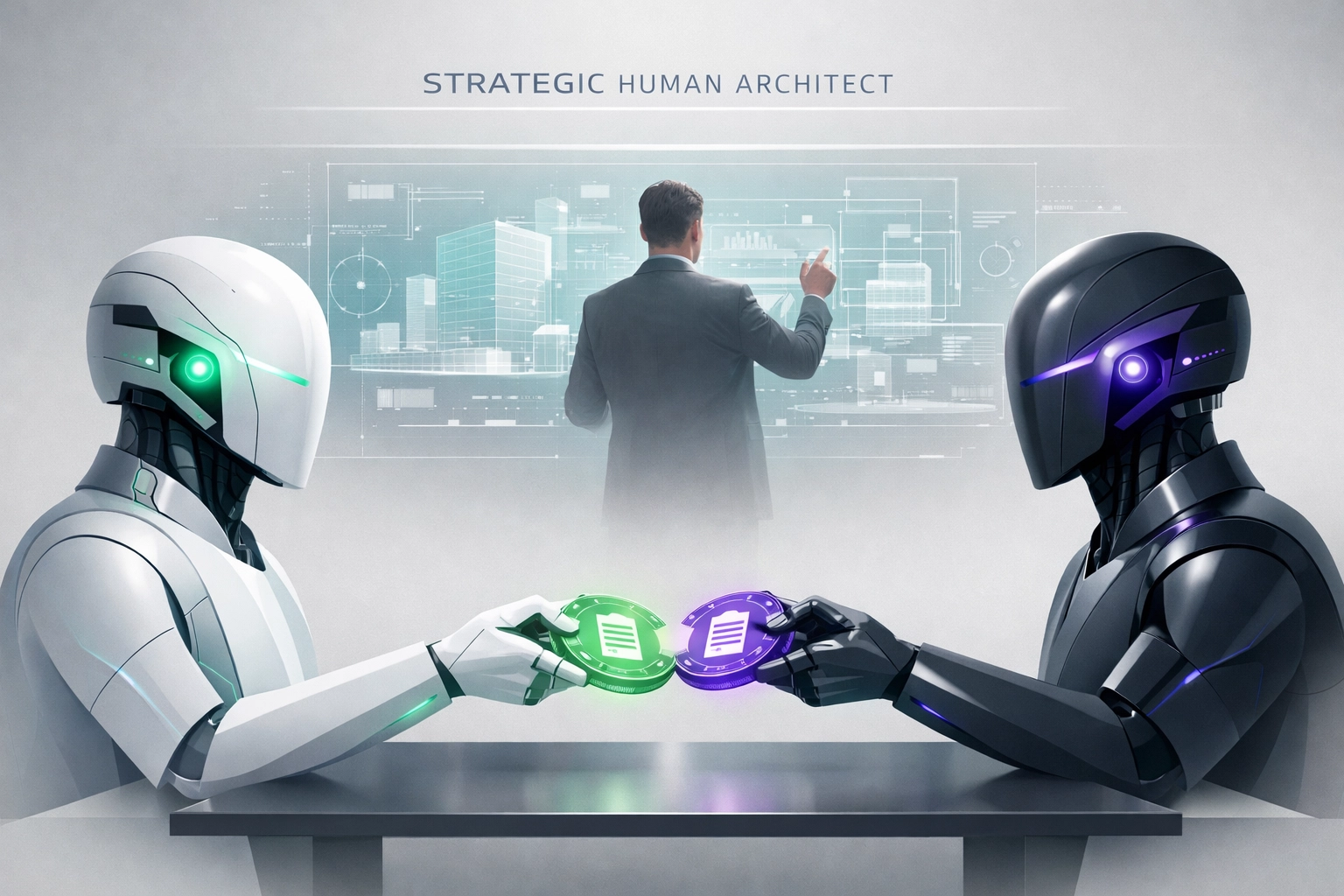
Inference-to-inference (I2I) negotiations are default.
Your personal AI negotiates with a vendor’s AI. Price, terms, risk, integration. Settled in 0.001 seconds.
So where does the human go?
Into the role that actually moves revenue: the Strategic Human Architect.
Not “closing”.
Architecting the system that closes.
In 2050, the negotiation premium shifts again.
From charm → to calibration → to architecture.
Marketing: Hyper-personalised Reality Streams (Not Ads)
The 2020s ad model dies from overexposure.
By 2050, marketing isn’t “ads”. It’s reality delivery.
People don’t scroll feeds.
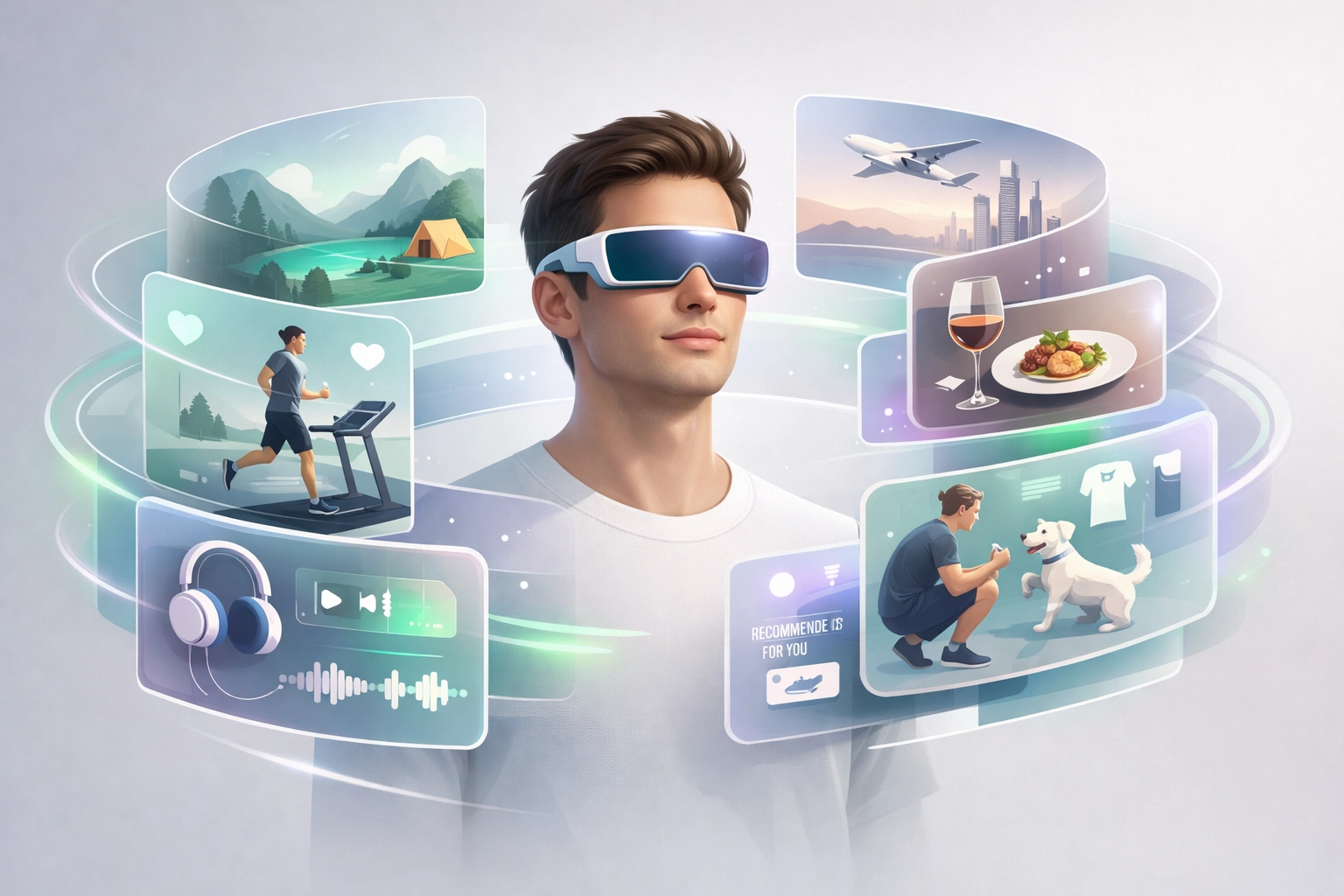
They inhabit hyper-personalised reality streams: sensory layers tuned to preference signals, context, and identity permissions.
Marketing teams become Reality Experience Designers.
Brand becomes an ambient system.
Always on. Quiet. Precise.
Operations: The “Autonomous” Enterprise (Self-optimising Everything)
In 2050, the COO isn’t a person.
It’s an oversight protocol.
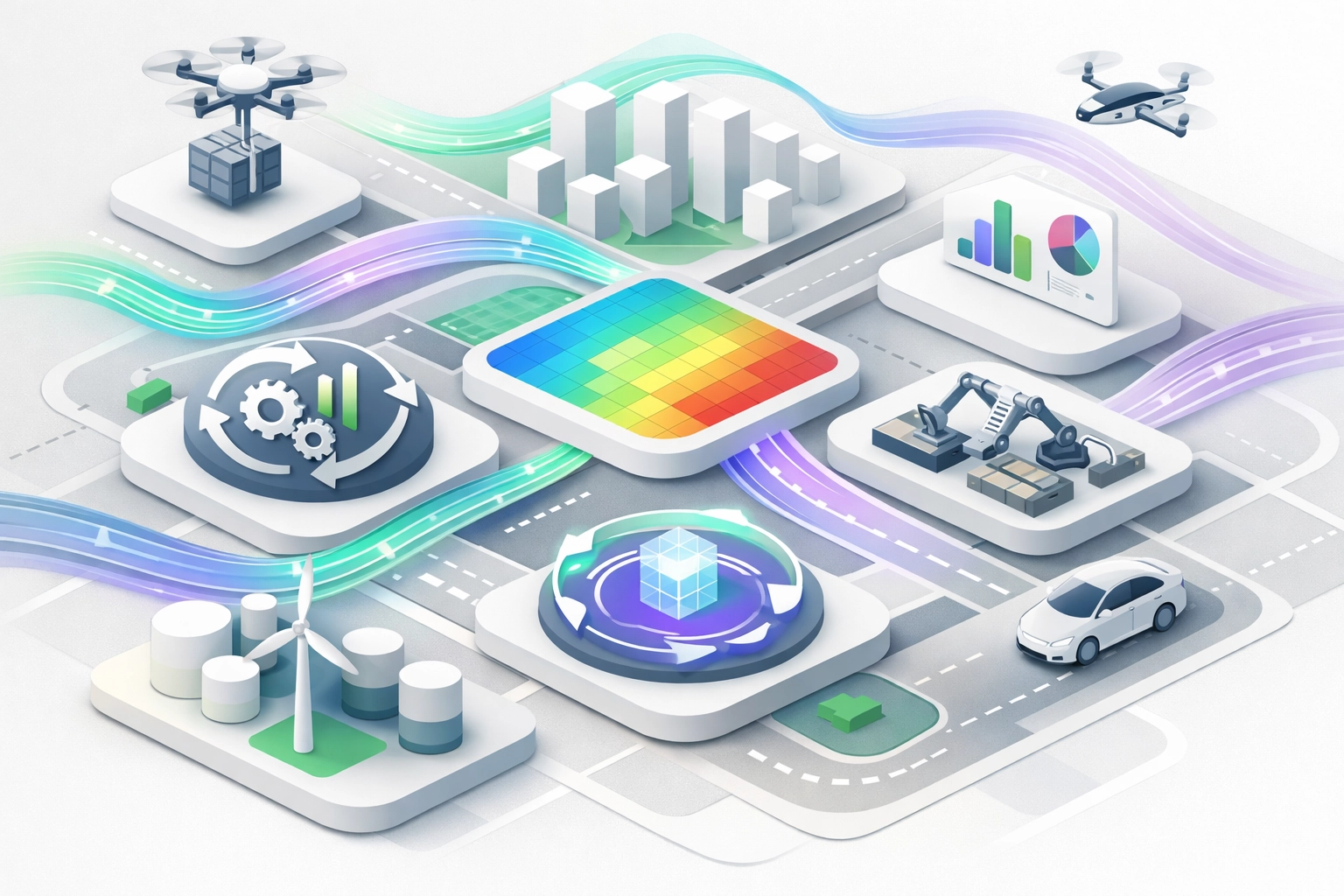
Operations becomes a self-optimising loop: forecast → allocate → execute → learn. Repeating in real time.
Operations stops being a department.
It becomes a continuously running optimisation engine.
HR and IT: The Fusion into a Single “People Architecture” Hub
By 2050, HR doesn’t sit next to IT.
HR is IT’s twin. Fully fused.
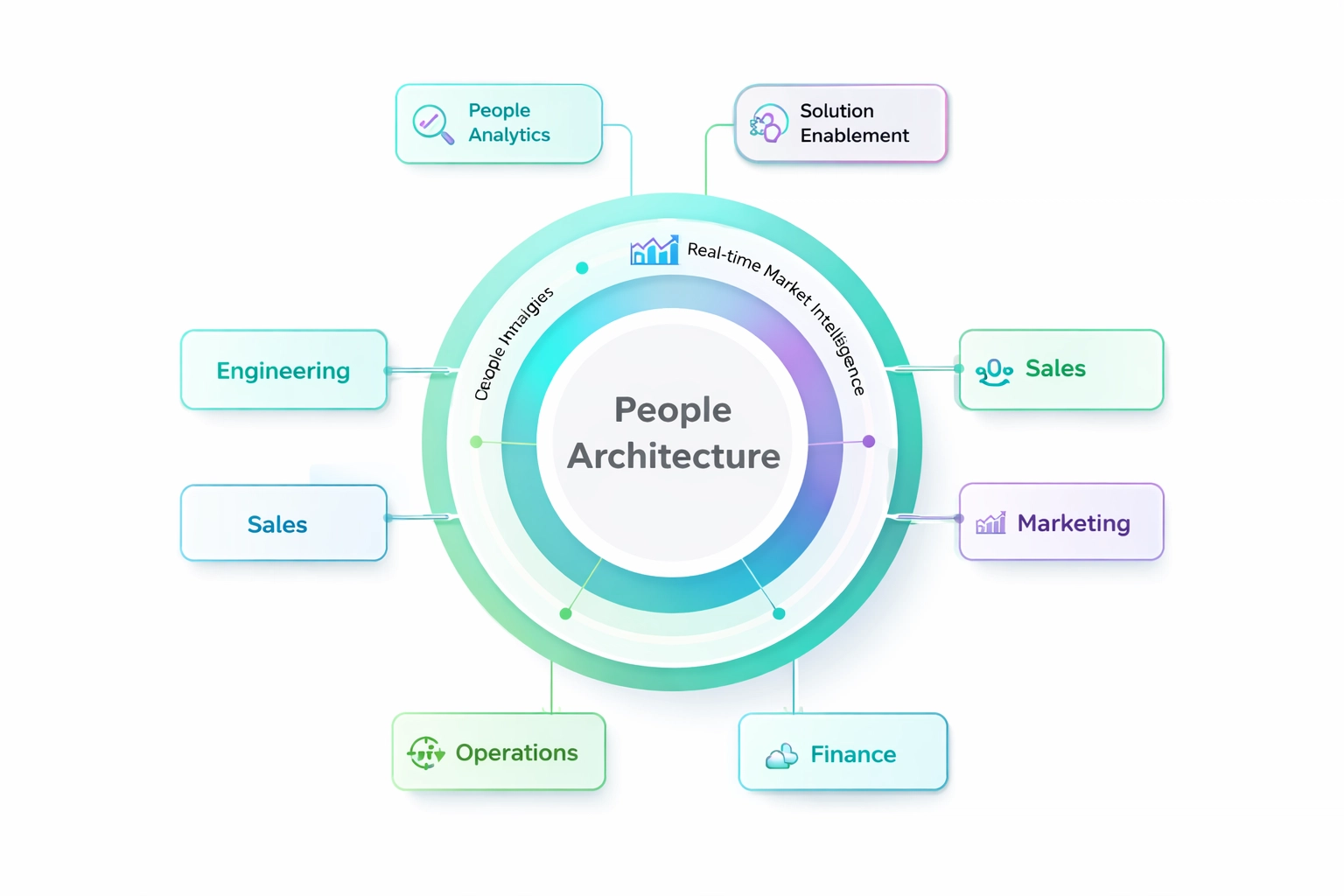
One hub. One mandate: design the conditions for humans and machines to contribute safely, profitably, and at speed.
Call it People Architecture.
This is the centre that connects every other business function via:
Engineering plugs into it for capability design and agent permissions.
Operations plugs into it for capacity and scheduling.
Marketing plugs into it for experience talent and ethics.
Sales plugs into it for negotiation policy and trust.
Recruitment (as 2026 knew it) is gone.
“Acquisition” becomes “synchronisation”.
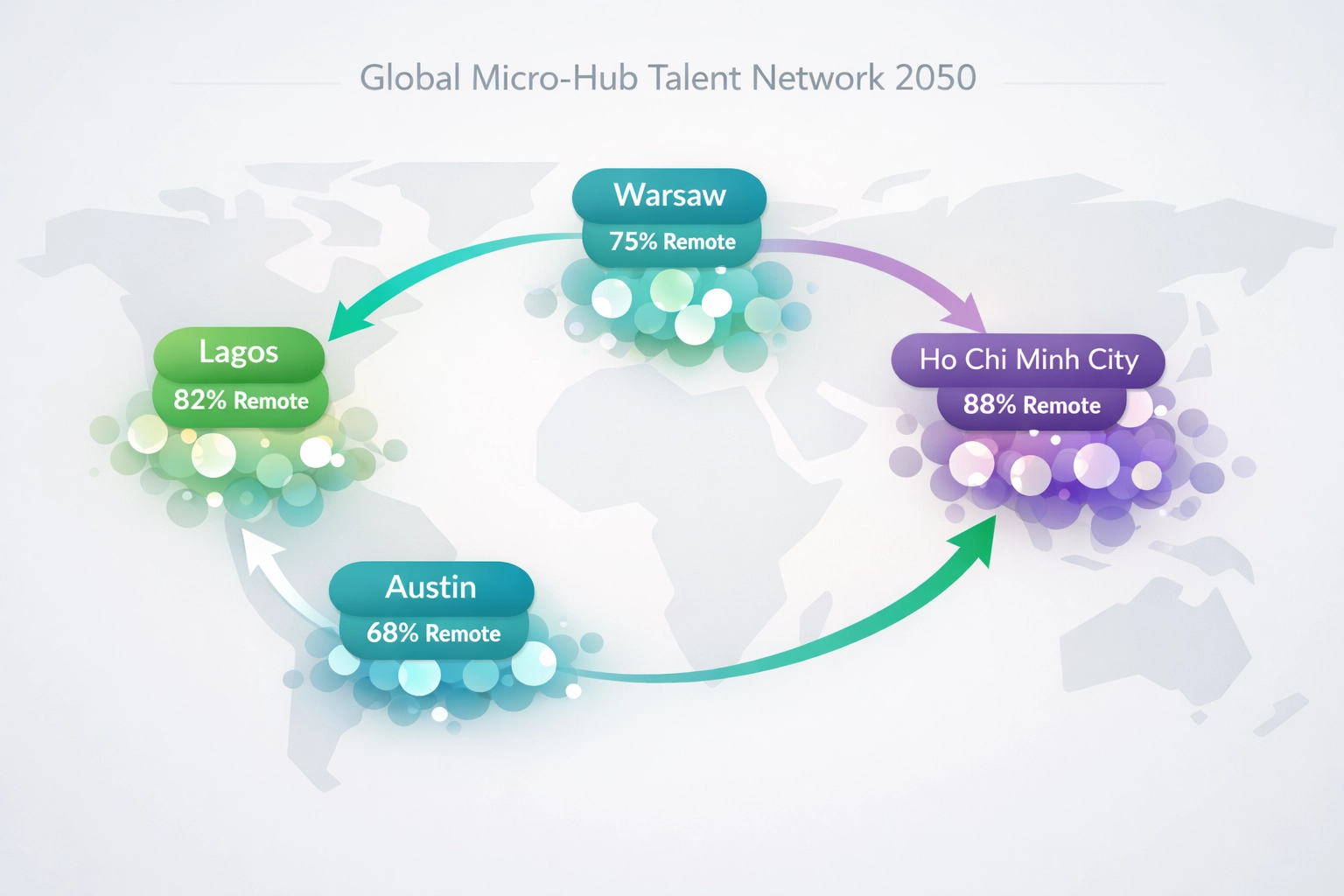
The Global Micro-Hub Reality: Lagos, Warsaw, and Beyond
The 2050 workforce is truly borderless. The death of the HQ is complete. Talent clusters are no longer defined by where the office is, but by where the energy and infrastructure are cheapest and the neural-link latency is lowest.

Building the Foundation: 2026 to 2050
2050 looks like science fiction.
The path to it looks like a spreadsheet.
The first domino is already down: the move from workforce planning to agent planning.
Once you can plan agents, you can plan contribution.
Once you can plan contribution, you can dissolve the job.
The subtle nod (because it matters): today’s market signals are the earliest, most practical bricks in this future.
Not the future itself. The foundations.
No heroics.
Just better visibility into supply, demand, compensation, and hub momentum—so the 2050 model doesn’t arrive as a shock.
The 2050 Outlook: Analytical Forecast
Market condition: extreme liquidity.
Contribution model: fluid · project-based.
Primary risk: algorithmic bias · systemic homogenisation.
By 2050, the workforce behaves like a living network: global, elastic, and relentlessly measurable.
The failure mode isn’t “can’t hire”. It’s “can’t coordinate”.
Current signals (March 2026):
The 2050 workforce isn’t “coming”.
It’s compounding.
Forecast Analysis: The 2050 Reality
The shift from 2026’s hybrid headcount to 2050’s contribution networks forces a full rewrite of workforce strategy. ASML, Anthropic, and emergent DAOs compete in a single global auction for cognitive cycles, where the scarcest asset is not people but the right human–agent configuration at the right latency and governance level. Median contribution value for top-tier intent architects exceeds $2.4M per human-centaur by 2050, and the competitive edge comes from coordination speed: negotiation policy that machines can execute, operations loops that self-optimise, marketing that streams personalised realities, and a fused People Architecture hub that connects every function through analytics, market intelligence, and enablement. The terminal risk stays constant across the timeline—bias, drift, and homogenisation—but the blast radius expands as autonomy rises.